


Safety Requirements for Scissor Lifts
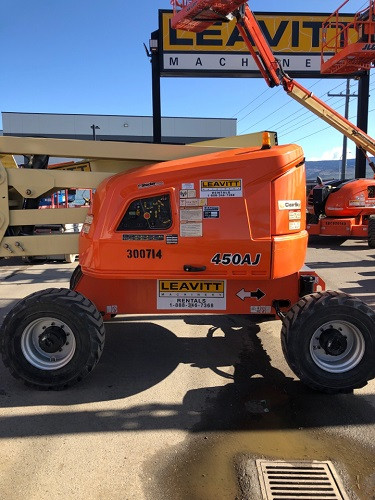
Scissor lift equipment are known as "moveable scaffolds," according to the OSHA. These industrial machines are capable of raising heavy and large loads which are balanced well. They are responsible for moving employees and their supplies to and from high elevations in an efficient and safe way. Because these mobile heavy machines are categorized as heavy machines, there are a lot of safety requirements that apply to the maintenance and use of scissor lifts.
Movement
Scissor lifts sit upon a wheeled base so they can move around to access a wider variety of areas. These pieces of equipment have been designed to move heavier loads, equipment and even employees up and down to work areas. For safety reasons, workers are not permitted to ride on a scissor lift during the relocation process. Usually, this is to help make sure that no one falls from the machine while it is being used. All employees working around a scissor lift as well as directly with the equipment should be informed about its movement prior to the driver releasing the safety brake to be able to make the lift move. Constant communication around heavy machinery helps keep the working place and all individuals in it safe.
Fall Protection
To be able to guarantee that employees prevent falling when operating the machinery, there are several safety regulations to think about about forklift safety standards. Even though scissor lifts are not required to be enclosed, there are features like guard rails placed around the lift perimeter along with a lock that should be engaged on the lift platform entrance whenever the lift is being used. There are also slip guards in position for added safety.
Another good safety habit employees should make is ensuring that heavy cargo or anything on the lift platform is fastened down in a safe manner prior to moving the lift to be sure that nothing causes anybody on the lift platform to become injured.