







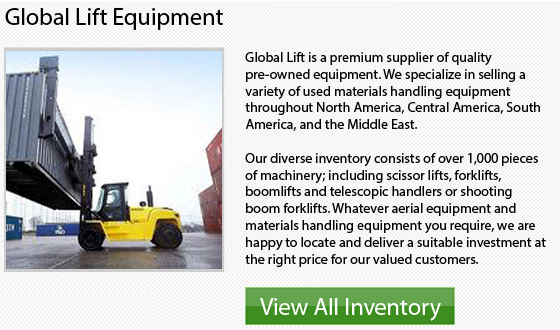
A forklift is an important piece of equipment within the material handling business. Also referred to as a powered industrial truck, a forklift is utilized to carry and move materials from one place to another. These trucks changed the warehousing and the manufacturing industries. Nowadays they are utilized for a wide range of applications and are considered to be vital for material handling.
The forklift needs an operator who uses the control levers to transport loads and materials around the worksite, usually a factory or warehouse. Businesses which own their own lift trucks should maintain the equipment to make certain they have a long lifespan. Forklift components, similar to any equipment parts, are susceptible to wear and tear and would eventually become worn. In order to make sure the lift truck works safely and efficiently, you should occasionally replace worn or damaged parts. Each and every lift truck part is made for a particular purpose. Below is a list of some lift truck attachments and their tasks:
Forklift Fork Positioner: The hydraulic attachment called forklift fork positioner helps to position the blades. Tines could move both separately or at the same time. Without the forklift fork positioner, the forklift operator must adjust forklift forks by hand for different load sizes.
Side Shifter: The hydraulic side shift attachment enables the operator to laterally shift both the forklift forks and the backrest. This particular kind of attachment makes it easier to position the load without having to change the truck's position.
Pole Attachments: Pole attachments are long metal poles used specifically to carry carpet rolls. The poles work better for this purpose than forklift forks.
Telescopic Forklift Forks: Telescoping tines are hydraulic attachments that allow the operator to both unload and load from one side. The telescoping forks could handle two pallets of various sizes at the same time. This kind of attachment is recommended for handling pallets in 'double deep racking'.