
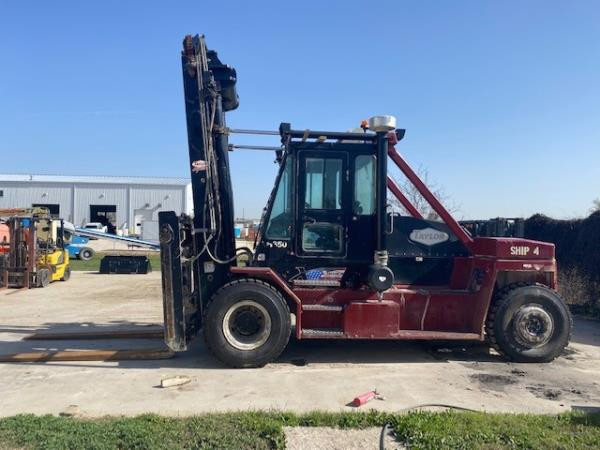

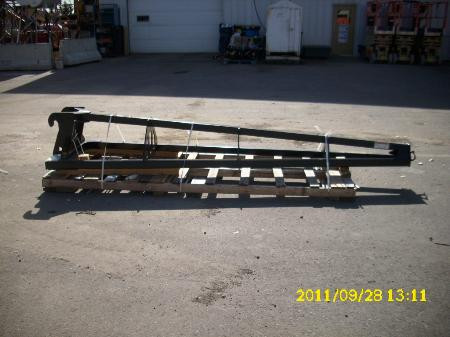

Forklifts are utilized to lift, engage and transfer palletized loads in manufacturing, warehousing, material handling, construction and mining applications. There are 3 main types of forklifts: a manual drive, motorized drive and fork truck. The load movement or travel is powered manually or by walking at the back of the machine with manual-drive lift trucks.
Motorized-drive model forklifts are complete with a motorized drive. In a lot of instances, a seat or protected cab is part of the design in order to keep the operator comfortable and safe. Fork trucks are another type that are motorized and consist of features such as cabs and backup alarms. In order to prevent the vehicle from overturning, several lift trucks are counterbalanced. Other types of forklifts consist of safety rails, a rotating element such as a turntable or different kinds of hand rails.
When choosing lift trucks, important specifications to take into consideration consist of lift capacity and stroke. Stroke is defined as the difference between the fully-raised and the fully-lowered lift positions. Lift capacity is the supportable, maximum load or forcforce or load. Other specifications for lift trucks consist of their tire and type of fuel.
Different fuel options for lift trucks comprise: LP or liquid propane, CNG or compressed natural gas, propane, diesel fuel, gasoline and natural gas. There are 2 major types of tires utilized for operating forklifts and fork trucks: solid and pneumatic. Solid or cushion tires need less maintenance compared to pneumatic tires and do not puncture. The cushion or solid tires do offer less shock absorption in general. Pneumatic or air-inflated tires however offer excellent drive traction and load-cushioning.
There are 7 classes of forklifts. The first class of forklifts, Class I, is either stand-up or seated 3 wheeled units that are electric-motor rider trucks. Usually, rider units are counterbalanced and could have either pneumatic or cushion wheels. Class II lift trucks are electric motor units which are utilized for stock applications or order picking in narrow aisle environments. These models offer extra swing mast or reach functions.
Forklift Class III lift trucks include walk-behind or standing-rider operated electric-motor trucks. Automated pallet lift trucks and high lift models are usually counterbalanced units. Class IV lift trucks have seated controls and cabs. These models are rider fork trucks with IC or internal combustion engines. Moreover, this class utilizes solid or cushion tires.
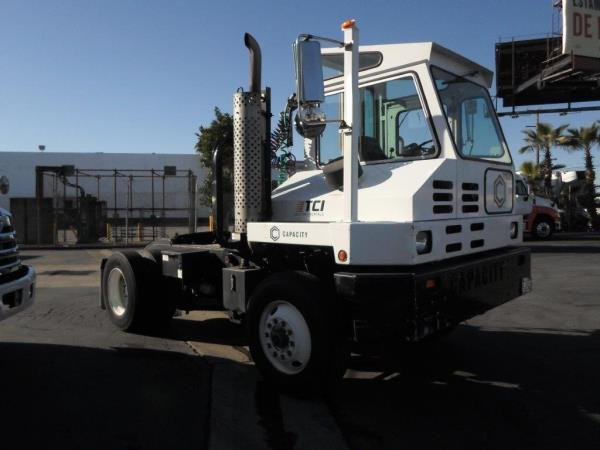
Class V lift trucks are rider fork trucks. They have cabs and seated controls, pneumatic tires and internal combustion or IC engines. Like Class IV forklifts, they are typically counterbalanced. Class VI forklifts are tow tractor lifts that are designed for a sit-down rider. This class is supplied with electric or internal combustion or IC engines.
Class VII lift trucks are the last classification and include rough terrain lift trucks, that are commonly utilized in agricultural, construction and logging applications. Class VII forklifts include all burden carriers and employee carriers.